

As the focus on sustainability in construction continues to grow, Eco-Friendly Scaffolding in India is becoming a key concern for builders and contractors alike. By opting for environmentally responsible scaffolding materials, we can not only cut down on our carbon footprint but also foster safer and greener construction practices.
What is Eco-Friendly Scaffolding?
Eco-friendly scaffolding refers to systems crafted from sustainable, recyclable, and low-impact materials. Unlike traditional scaffolding, which often relies on excessive steel or non-reusable parts, eco-friendly options put a premium on both environmental and human safety.
Key Features of Eco-Friendly Scaffolding
- Recyclable Materials: Constructed from aluminum, bamboo, or sustainable timber.
- Low Carbon Footprint: Manufacturing and transport processes are streamlined to minimize emissions.
- Reusable Components: Designed for multiple projects, helping to cut down on waste.
- Safety Compliant: Adheres to all Indian and international scaffolding safety standards.
Benefits of Using Eco-Friendly Scaffolding in India
Transitioning to sustainable scaffolding offers a range of benefits for both builders and the environment.
Environmental Benefits
- Reduces construction waste and reliance on landfills.
- Encourages recycling and the reuse of materials.
- Lowers energy consumption during the manufacturing process.
Economic Benefits
- Long-term savings thanks to reusable components.
- Cuts down on rental and replacement expenses.
- Supports green certifications and potential incentives.
Safety and Efficiency
- Lightweight materials like aluminum make installation a breeze.
- Durable components provide secure platforms for workers.
- Flexible modular systems can adapt to various project sizes.
Popular Eco-Friendly Scaffolding Options in India
A variety of scaffolding types are gaining traction for sustainable construction projects.
Aluminium Scaffolding
- Lightweight & Strong: Super easy to transport and set up.
- Reusable: Built to last, so you won’t need to replace it often.
- Minimal Environmental Impact: Aluminium is a champ when it comes to recycling.
For more details on aluminium and sustainable scaffolding solutions in India, you can check Alliance Scaffolding.
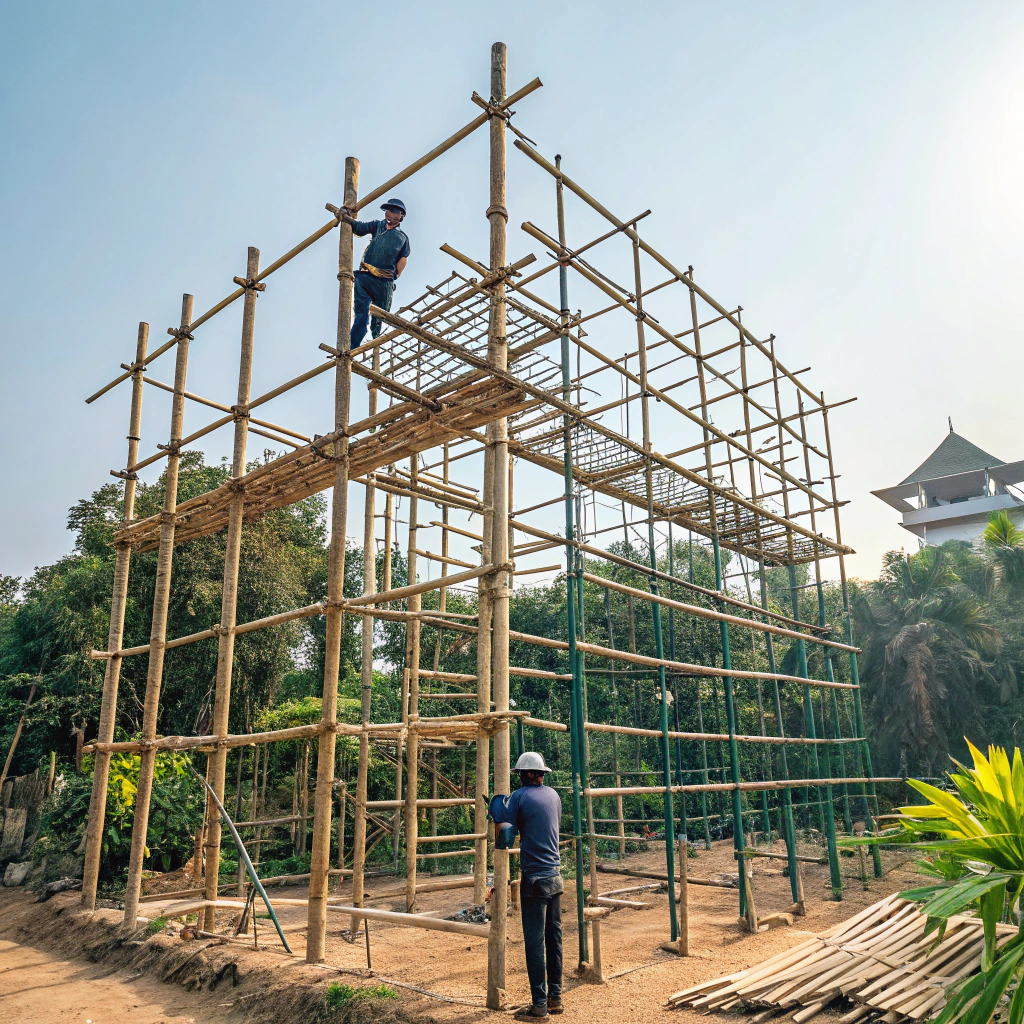
Bamboo Scaffolding
- Traditional yet Sustainable: A go-to choice in India, especially for smaller projects.
- Rapid Growth Material: Bamboo grows back way quicker than timber.
- Biodegradable: It leaves a tiny footprint on the environment.
Modular Steel Scaffolding with Eco Practices
- Recycled Steel: Uses less raw material but still packs a punch in strength.
- Long-Term Use: Cuts down on the need for frequent replacements.
- Adaptable: Its modular design fits right in at various construction sites.
Factors to Consider When Choosing Eco-Friendly Scaffolding
Picking the right sustainable scaffolding hinges on several project-specific factors.
Project Scale & Duration
- For smaller projects, bamboo or aluminium scaffolding might be the way to go.
- Larger projects typically call for modular steel scaffolding that embraces sustainable practices.
Budget & Cost Efficiency
- While the initial costs might be a tad higher, reusable components can save you money in the long run.
- Rental options for eco-friendly scaffolding are popping up more and more in India.
Safety Compliance
- Make sure your scaffolding meets Indian safety standards (IS codes).
- Lightweight aluminium scaffolding helps reduce worker fatigue and boosts efficiency.
Environmental Goals
- Opt for materials that can be recycled or are biodegradable.
- Look for manufacturers who are dedicated to green production methods.
How Eco-Friendly Scaffolding Supports a Greener Future
Embracing sustainable scaffolding practices plays a vital role in India’s expanding green construction movement.
- Reduces Carbon Emissions: From production, transportation, and waste.
- Promotes Circular Economy: Materials get reused across various projects.
- Enhances Corporate Responsibility: Builders show their commitment to caring for the environment.
- Encourages Green Certifications: Achieving LEED and IGBC certifications is simpler with sustainable practices. Learn more at the Indian Green Building Council (IGBC).
Conclusion
Eco-Friendly Scaffolding India is no longer just an option it is a necessity for builders committed to sustainability, safety, and cost efficiency. From aluminium to bamboo and modular steel, eco-friendly scaffolding solutions offer long-term benefits for both construction projects and the environment. By choosing sustainable scaffolding, India’s construction industry can build a greener future while maintaining high safety and efficiency standards.