

When it comes to construction, safety starts with a solid foundation, and that foundation is built on sturdy scaffolds. Whether you’re working on towering skyscrapers or handling smaller maintenance tasks, understanding the essential scaffolding components is key. These scaffolding components not only hold everything together but also play a vital role in keeping workers safe and ensuring the project runs smoothly.
Why It’s Important to Know Your Scaffolding Components
Every construction project relies heavily on scaffolding. If even one component is missing or weak, it can lead to instability, accidents, or costly delays. By familiarizing themselves with the various scaffolding components, site managers and workers can uphold safety standards while enhancing workflow.
Key benefits of using the right components:
- Improved balance and load distribution
- Lower risk of accidents
- Adherence to industry safety regulations
- Extended lifespan of scaffolding structures
By using the right scaffolding components such as standards, ledgers, and base plates, construction projects can improve safety and efficiency. Companies like Alliance Scaffolding in Pune provide both steel and aluminium scaffolding rentals, ensuring builders get exactly what they need.
Essential Scaffolding Components You Can’t Overlook
1. Standards (Vertical Tubes)
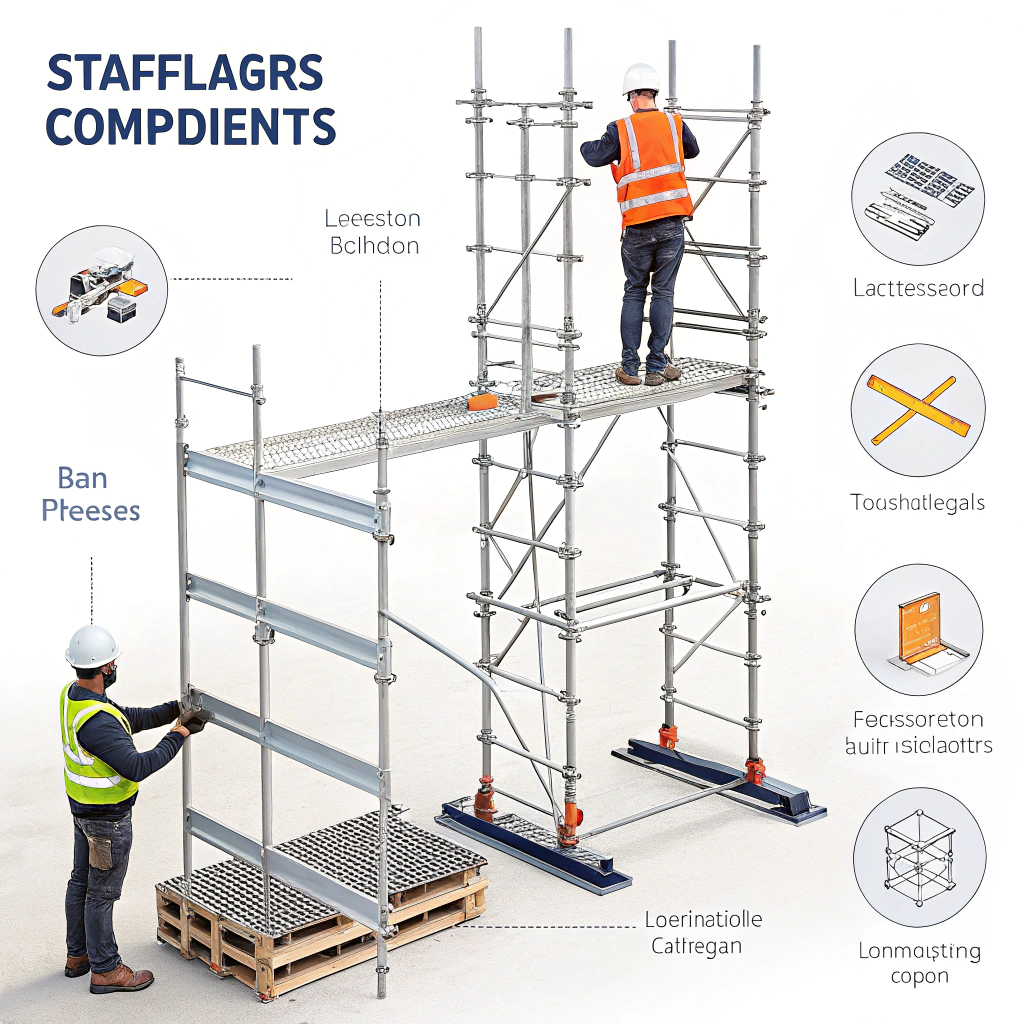
Standards are the vertical pipes that carry the weight of the scaffold down to the ground. They are the backbone of the scaffolding system, providing essential structural stability.
2. Ledgers (Horizontal Tubes)
Ledgers connect the standards horizontally, creating levels and supporting work platforms. These components are crucial for a well-organized workspace.
3. Transoms
Transoms are placed across the ledgers to offer extra support for the working platforms, helping to distribute the load evenly.
4.Base Plates
Base plates sit beneath the standards to help spread the weight and prevent the scaffolds from sinking into the ground. For uneven surfaces, adjustable base jacks are often utilized.
5.Couplers (Clamps)
Couplers are used to connect different scaffold pipes together. They come in various types, including right-angle couplers, swivel couplers, and putlog couplers, each designed for specific functions.
Other Must-Have Safety Components
- Guard Rails – Crucial for keeping workers safe from falls off platforms.
- Toe Boards – Act as a barrier to prevent tools and workers from slipping off the edge.
- Braces – These diagonal tubes add strength and stability to the entire structure.
- Decking/Planks – Made from wood or steel, these planks create the walking surface for workers.
- Ladders & Access Points – Ensure safe entry and exit to and from the scaffolding.
All these scaffolding components are vital for adhering to construction safety standards.
Scaffolding Components and Safety Compliance
Both international and Indian regulations stress the importance of using scaffolding correctly. According to IS 4014 and OSHA standards, it’s essential to regularly inspect and replace any damaged components. Sticking to these guidelines not only keeps workers safe but also ensures you’re following the law.
Quick Checklist for Safe Scaffolding Setup
- Make sure standards and ledgers are aligned properly.
- Secure couplers tightly to prevent any loose joints.
- Ensure base plates are set on solid ground.
- Install guard rails and toe boards for added protection.
- Regularly inspect scaffolding components before use.
Final Thoughts on Scaffolding Components
Every part of a scaffold plays a vital role in ensuring safety and stability.
By familiarizing yourself with standards, ledgers, transoms, couplers, and base plates, construction teams can reduce risks and boost efficiency.
Keeping these scaffolding components well-maintained and regularly inspected will always be worth it in the long run. For detailed guidelines on scaffold safety, visit HSE Scaffolding Safety